
Split System Air Conditioning Installation Melbourne
If your energy bills have been climbing and some rooms still feel too hot in summer or too cold in winter, your air conditioning setup is likely part of the problem. Whether you are dealing with an ageing unit that struggles through Melbourne's temperature swings or a home that has never had proper climate control, a well-planned split system air conditioning installation can transform your daily comfort and cut your running costs at the same time.
With over 50 years of combined experience, TruEast's fully licensed technicians specialise in helping property owners across Melbourne's eastern suburbs, Yarra Valley and Dandenong Ranges find the heating and cooling solution that genuinely fits their home. As accredited VEU rebate specialists, the team handles all the paperwork so you can access Victorian Energy Upgrades discounts without the hassle.
In this guide, you will learn what split system installation really costs, how to size a unit correctly, what the installation timeline looks like and what separates a quality aircon installation from a quick job that causes headaches down the track.
Why So Many Melbourne Homes End Up With the Wrong System
Heating and cooling account for roughly 40% of household energy use in Australia, according to the Australian government's Energy Rating program. The system you choose, and how well it is installed, directly impacts your comfort and your power bill.
Yet many homeowners across Melbourne's east end up with systems that are the wrong size, poorly positioned or installed by someone without the right qualifications. The result is a unit that cycles on and off too frequently, fails to heat or cool evenly and wears out years before its time.
An oversized split system blasts cold air, switches off, then restarts constantly. This wastes energy and creates uncomfortable temperature swings. An undersized unit runs flat out trying to reach a temperature it can never maintain, driving up electricity costs while leaving you uncomfortable.
Older units without inverter technology can use 30 to 40% more electricity than a modern reverse cycle split system. And if you are still running a gas heater, the Victorian Energy Upgrades (VEU) program offers significant discounts when you switch to an efficient reverse cycle air conditioner, with potential savings of up to $370 per year on operating costs for space heating alone.
What Does Split System Air Conditioner Installation Cost?
For a standard single split system (supply and installation) in Melbourne, most homeowners pay between $1,800 and $4,800. A straightforward back-to-back installation sits at the lower end. More complex jobs with longer pipe runs, difficult access or electrical upgrades push the price higher.
Multi-head split systems typically range from $4,200 to $8,000 depending on the number of indoor units and installation complexity.
Key factors that affect your final price include:
- Unit capacity (kW size): A 2.5 kW bedroom unit costs significantly less than a 7 kW living area unit.
- Brand and energy efficiency rating: Higher star-rated models cost more upfront but deliver lower running costs over their 10 to 15-year lifespan.
- Installation complexity: Pipe run length, wall material, roof access and additional electrical circuits all influence labour costs.
- VEU rebate eligibility: Replacing an old gas heater or upgrading from an inefficient system may qualify you for discounts that reduce your out-of-pocket cost.
Always get a fixed quote after a proper site assessment. A qualified technician needs to see your home to account for pipe runs, electrical requirements and unit placement before giving you an accurate price.
How to Size a Split System for Your Home
Getting the right kW capacity is the single most important decision in the entire air conditioning installation process.
As a starting point, allow roughly 120 to 150 watts of cooling capacity per square metre. A 20 square metre bedroom typically needs a 2.5kW unit, while a 40 square metre open-plan living area might require 5kW to 7kW. But square metres alone do not tell the full story.
A qualified technician will also consider ceiling height, insulation quality, window size and orientation, sun exposure and the number of heat-generating appliances. Homes in suburbs like Croydon, Ringwood or Montrose often have minimal insulation, which means extra capacity is needed. Properties in the Yarra Valley may benefit from natural shade, while those on the Dandenong Ranges with full sun exposure need more again.
Online sizing calculators give a ballpark figure but cannot assess insulation, air leakage or the specific microclimate of your property. TruEast's technicians carry out a proper heat load assessment before recommending a system, ensuring you get consistent comfort without wasting energy.
What Is Included in a Quality Installation?
A standard split system installation Melbourne homeowners should expect includes supply and mounting of the indoor unit, installation of the outdoor unit on a ground or wall bracket, refrigerant piping (usually up to 3 metres for back to back), electrical connection with a dedicated circuit, an isolating switch, condensate drainage, testing, commissioning and a walkthrough of your new system.
Longer pipe runs, switchboard upgrades, difficult access and structural modifications will add to the cost. A reputable installer identifies these extras during the site assessment and includes them in your fixed quote.
Timeline: A single split system typically takes three to four hours for a back-to-back setup. Complex installations or multi-head systems may take a full day. Book during autumn or winter for shorter wait times and you can take advantage of the heating mode through the cooler months.
Choosing the Right System Type
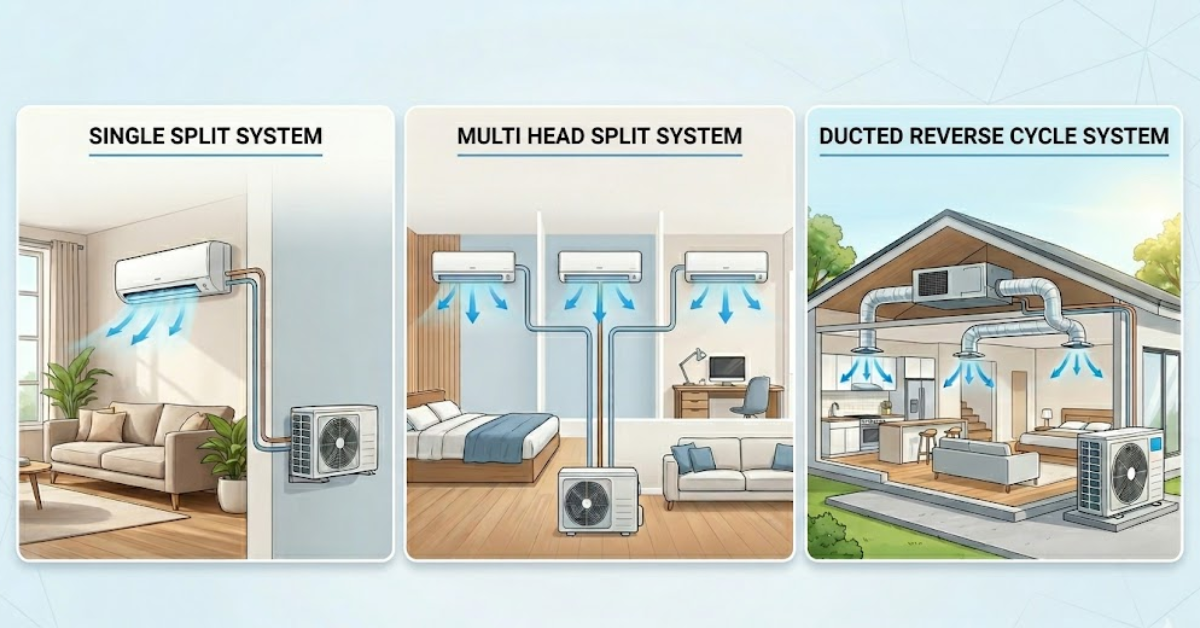
- Single split systems are best for individual rooms or open-plan areas. They are the most affordable to install and energy-efficient for single-zone use.
- Multi head split systems connect several indoor units to one outdoor compressor, suiting homes that need climate control in three or four rooms without multiple outdoor units.
- Ducted reverse cycle systems distribute heating and cooling through ceiling ducts to every room. They cost significantly more ($10,000 to $20,000 or above) and work best in homes with suitable roof space.
For most homes in Melbourne's eastern suburbs, a combination of split systems in key living areas and bedrooms offers the best balance of comfort, efficiency and value. TruEast's approach is to assess your home honestly and recommend what genuinely suits your situation.
VEU Rebates: Reducing Your Installation Cost
The Victorian Energy Upgrades (VEU) program provides discounts on energy-efficient products, including reverse-cycle air conditioners. If you are replacing a gas heater or upgrading to a more efficient system, you may be eligible for a significant upfront discount.
The program has been extended through to 2045 and is open to all Victorian households with no income limits. The discount is applied at the point of sale, so you pay less on the day rather than claiming money back later.
As VEU accredited specialists, TruEast handles all the administration: confirming eligibility, completing paperwork and applying the maximum available discount to your quote. Combined with finance options like ZipPay and AfterPay, upgrading to an efficient system is more accessible than many homeowners expect.
Why Your Installer's Qualifications Matter
Split system installation must be carried out by a licensed refrigeration and air conditioning technician. Installers holding only a restricted electrical licence are not qualified to handle refrigerant or commission a system to manufacturer specifications.
A poorly installed system can void your warranty, leak refrigerant, operate inefficiently and pose safety risks. TruEast's technicians have completed full four-year apprenticeships in air conditioning and refrigeration, not short courses or restricted licences. Every installation meets manufacturer requirements, Australian standards and the quality level that protects your investment.
An older or incorrectly sized system can easily cost $200 to $400 more per year to run than a properly sized modern unit. Over 10 years, that adds up to $2,000 to $4,000 in wasted electricity, not including more frequent repair costs.
Best Practices for Melbourne Property Owners
- Signs you need a replacement: your unit is over 10 to 12 years old and repair costs are increasing; rooms never reach a comfortable temperature; energy bills keep rising despite no change in usage; or you are still running a gas heater and want to switch to electric.
- Understanding energy ratings: Since April 2020, all non-ducted split systems carry a Zoned Energy Rating Label showing star ratings for three climate zones. Melbourne sits in the cold zone. Each additional star typically represents a 15 to 25% reduction in energy consumption for units of the same capacity. Pay attention to heating efficiency as well as cooling, since your system works harder during Melbourne's longer winter months.
- Maintenance between services: Clean indoor filters every four to six weeks during heavy use, keep the outdoor unit clear of debris, check the condensate drain is not blocked and schedule a professional service at least once a year.
How TruEast Works
TruEast's process starts with an honest assessment, not a sales pitch. A qualified technician visits your property to assess room sizes, insulation, window orientation and your comfort priorities. Based on this, the team recommends the right system. If a repair makes more sense than a replacement, that is what they will recommend.
You receive a clear, fixed price quote covering everything: unit supply, installation, electrical work and VEU rebate deductions. Fully qualified technicians then carry out the work to manufacturer specifications, including proper commissioning and a system walkthrough.
Based in Croydon, TruEast serves homeowners and businesses across Melbourne's eastern suburbs, Yarra Valley and Dandenong Ranges. The team does not install and disappear. Ongoing maintenance, repairs and responsive communication are central to how the business operates.
Frequently Asked Questions
How much does split system air conditioning installation cost in Melbourne?
Most homeowners pay between $1,800 and $4,800 for a single split system, including supply and standard installation. Multi-head systems range from $4,200 to $8,000. The final price depends on unit capacity, brand, installation complexity, and electrical upgrades. Always get a fixed quote after a site assessment.
What size split system do I need?
Allow roughly 120–150 watts per square metre as a starting guide. A 20 square metre room typically needs 2.5kW, while a 40 square metre living area may need 5kW to 7kW. Ceiling height, insulation, windows and sun exposure all affect sizing, so a professional assessment gives the most accurate recommendation.
Am I eligible for VEU rebates on a new split system?
You may be eligible if you are replacing a gas heater or upgrading from an inefficient system. The VEU program is open to all Victorian households with no income limits. TruEast handles all paperwork and applies the discount directly to your quote.
Should I repair or replace my old air conditioner?
If your system is under 8 years old and repair costs are modest, repairing often makes sense. If it is over 10 years old, lacks inverter technology or needs frequent repairs, replacing it with a modern efficient unit usually delivers better long-term value and comfort.
Can a split system heat and cool?
Yes. Most modern split systems are reverse cycle, providing both cooling and heating from a single unit. Reverse-cycle air conditioners are the most energy-efficient form of electric heating available, making them ideal for Melbourne's climate.
How often should I service my split system?
Professional servicing at least once a year is recommended. Between services, clean indoor filters every four to six weeks during heavy use. Regular maintenance keeps your system efficient, extends its lifespan and helps avoid costly breakdowns.
Get the Right System, Installed the Right Way
A properly sized and professionally installed split system is one of the smartest investments you can make in your home's comfort and energy efficiency. It reduces your power bills, keeps every room comfortable and delivers reliable performance for years to come.