
Split System Rebate Victoria (VEU): How It Works
If your energy bills keep climbing and your old heater or air conditioner struggles to keep up, you're not alone. Thousands of Melbourne homeowners face the same frustration every summer and winter. The good news is that the split system rebate Victoria offers through the Victorian Energy Upgrades (VEU) program can significantly reduce the cost of upgrading to a modern, energy-efficient system.
But navigating eligibility requirements, understanding what's covered and finding the right installer can feel overwhelming. This guide breaks down everything you need to know about claiming a Victorian government split system rebate, from who qualifies to how the installation process works.
Whether you own a home in the eastern suburbs, Yarra Valley or Dandenong Ranges, understanding your options could save you thousands on a new system and hundreds each year on energy bills. TruEast are VEU rebate specialists who handle the entire process, so you can focus on enjoying year-round comfort.
Why Melbourne Homeowners Are Paying Too Much for Comfort
Melbourne's climate is unpredictable. Scorching summers in the high 30s can give way to single-digit winter mornings within months. That range puts enormous pressure on heating and cooling systems, especially older ones that were never designed to handle today's energy costs.
If your system is more than 10 years old, it's likely running well below the efficiency standards of modern units. Older ducted heaters, wall furnaces and single-function air conditioners often consume two to three times the energy of a current reverse-cycle split system. That translates directly into higher bills without delivering better comfort.
The hidden cost goes beyond electricity. An inefficient system works harder to maintain temperature, which accelerates wear on components. That means more frequent breakdowns, expensive repair callouts and the stress of a system failing on the hottest or coldest day of the year.
Many homeowners also don't realise they're missing out on government incentives. The Victorian Energy Upgrades program has been running for years, yet a significant number of eligible households haven't claimed their rebate. In some cases, that means paying full price for a system upgrade when a substantial discount was available.
Delaying an upgrade also means delaying savings. Every season you run an inefficient system is another quarter of inflated energy bills. For a typical three-bedroom home in suburbs like Croydon, Ringwood or Lilydale, upgrading from an old gas heater to a modern reverse cycle split system can reduce heating costs by up to 60 to 70 per cent, according to Sustainability Victoria.
What Is the Victorian Energy Upgrades Program?
The Victorian Energy Upgrades program (formerly known as the Victorian Energy Efficiency Target or VEET) is a state government initiative designed to help households and businesses reduce energy consumption. It does this by offering rebates and incentives on approved energy-efficient products, including split-system air conditioners and heat pumps.
Under the VEU program, accredited providers like TruEast can offer discounted installations because the government provides certificates for each eligible upgrade. These certificates have a tradeable value, which is passed on to you as a point of sale discount. You don't need to apply for a rebate after the fact or wait for reimbursement. The savings are applied upfront.
Who Is Eligible?
Eligibility for a split system rebate Victoria residents can access is straightforward. Your property needs to be located in Victoria and connected to the electricity grid. Both homeowners and renters (with landlord permission) can participate. The program covers residential and commercial properties.
The system being replaced generally needs to be an existing, operational heating or cooling unit. New builds may have different requirements. Your accredited provider will confirm eligibility during an initial assessment.
What Does the Rebate Cover?
The VEU program covers reverse-cycle split-system air conditioners that meet minimum energy efficiency requirements. The system must have a Zoned Energy Rating Label (ZERL) that meets the threshold set by the program.
Covered items typically include the supply and installation of the new split system, removal and disposal of the old unit, and all associated electrical and refrigeration work. The rebate amount varies depending on the system's capacity and efficiency rating. Higher efficiency units attract larger rebates.
Choosing the Right Split System for Your Home
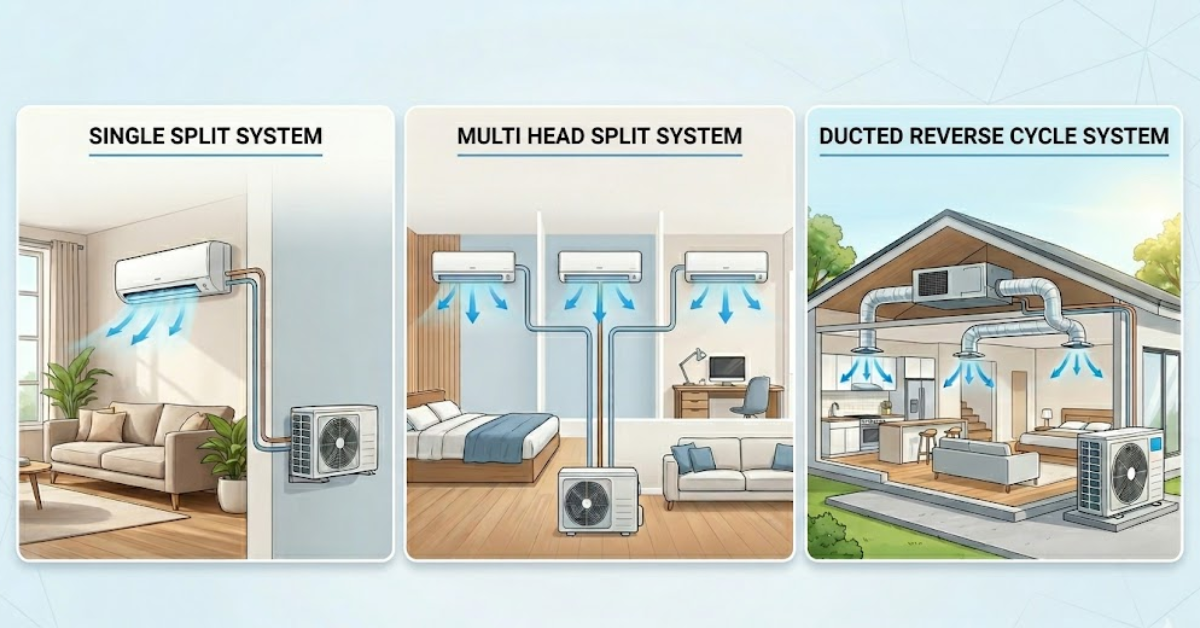
Not every split system suits every property. Selecting the wrong size or type is one of the most common and costly mistakes Melbourne homeowners make.
Why Sizing Matters
An undersized system will run constantly, struggling to reach your desired temperature and driving up energy consumption. An oversized unit will cycle on and off too frequently, which wastes energy, increases wear and creates uncomfortable temperature swings. Proper sizing based on room dimensions, insulation, window orientation and local climate is essential.
A qualified technician should perform a heat load calculation before recommending a system. This accounts for factors specific to your property, not just the square metreage of a room. Homes in the Dandenong Ranges, for example, often need different specifications than those in lower-elevation suburbs due to cooler average temperatures.
Reverse Cycle Split Systems Explained
A reverse cycle split system is both a heater and an air conditioner in one unit. It works by transferring heat rather than generating it, which is why it uses significantly less energy than traditional gas heaters or electric bar heaters.
In cooling mode, it extracts heat from inside your home and releases it outside. In heating mode, it reverses the process, pulling warmth from the outdoor air (even in cold conditions) and pumping it inside. This heat pump technology is the reason reverse cycle systems are considered one of the most efficient forms of heating available in Australia.
For most Melbourne homes, a reverse cycle split system provides the best balance of upfront cost, running efficiency and year-round versatility.
System Options: Split Systems, Ducted and Multi-Split
When upgrading with a Victorian government split-system rebate, it helps to understand the main options available.
- Single split systems are ideal for heating and cooling individual rooms or open-plan living areas. They're the most affordable option and simplest to install, making them popular for targeted comfort in bedrooms, living rooms or home offices.
- Multi split systems connect multiple indoor units to a single outdoor compressor. This suits homes where you want climate control in several rooms without the complexity of full ducted systems. Each room can be set to a different temperature.
- Ducted reverse cycle systems provide whole home comfort through ceiling or underfloor ducts. They're best suited to larger homes or new builds where ductwork can be integrated. The upfront investment is higher, but ducted systems offer discreet, even temperature distribution throughout the entire home.
For homes in suburbs like Mooroolbark, Montrose and Belgrave, where properties vary widely in size and layout, TruEast can assess which option delivers the best comfort and value for your specific situation.
The Cost of Getting It Wrong
Choosing the wrong system or installer doesn't just affect comfort. It affects your wallet for years to come.
An incorrectly sized system can add 30 to 40 per cent to your annual energy costs compared to a properly matched unit. Poor installation, including incorrect refrigerant charging, badly positioned outdoor units or inadequate drainage, will reduce system lifespan and efficiency from day one.
Using an installer who holds a restricted licence rather than a full trade qualification is another risk. Restricted licences allow basic installation work but not the diagnostic and repair expertise needed for long-term system performance. If something goes wrong, you may need to pay a fully qualified technician to fix the original work.
Then there's the rebate itself. If your installer isn't an accredited VEU provider, you miss the rebate entirely. Some homeowners only discover this after they've already paid full price for installation.
The bottom line is that a proper assessment, correct sizing, and qualified installation will protect your investment and maximise the value of your Victorian Energy Upgrades rebate
Best Practices for Melbourne Property Owners
A few practical steps can help you get more value from your heating and cooling system and avoid common pitfalls when upgrading.
- Replace systems older than 10 to 12 years: Older units consume significantly more energy than modern alternatives and are more prone to breakdowns. If your energy bills have been climbing or your system struggles to maintain a comfortable temperature, an upgrade will likely pay for itself through lower running costs.
- Always request a heat load calculation before installation: A properly sized system depends on your room dimensions, insulation, window orientation and local climate. Rough estimates lead to oversized or undersized units, both of which waste energy and reduce comfort.
- Choose an installer with a full trade qualification: Look for technicians who have completed a four year apprenticeship in air conditioning and refrigeration, not a restricted licence. Full qualifications cover installation, diagnostics, repairs and ongoing servicing.
- Check energy ratings for your specific climate zone: The Zoned Energy Rating Label (ZERL) shows how a system performs in different Australian regions. Make sure the rating you're comparing reflects Melbourne conditions, not a national average. Higher rated systems cost more upfront but deliver greater savings over their lifespan.
- Claim your VEU rebate before your current system fails: Planning an upgrade while your old system is still running gives you time to compare options, book a proper assessment and avoid emergency pricing. TruEast handles all VEU administration, so you can focus on choosing the right system rather than navigating paperwork.
If you're unsure where to start, a professional assessment is the best first step.
How the VEU Rebate Process Works with TruEast
One of the biggest barriers to claiming a split-system rebate Victoria homeowners face is the paperwork. The VEU program involves specific documentation, compliance requirements and accreditation standards. TruEast handles all of this for you.
Here's how the process works:
- Book a free assessment. A TruEast technician visits your property to assess your current system, perform a heat load calculation and discuss your comfort priorities.
- Receive honest recommendations. Based on the assessment, you'll receive a clear recommendation for the right system, including the VEU rebate amount applied upfront. No pressure, no upselling.
- Confirm and schedule. Once you're happy with the recommendation, TruEast schedules the installation at a time that suits you.
- Professional installation. Fully qualified technicians (with four-year apprenticeships in air conditioning and refrigeration) complete the installation to manufacturer specifications.
- VEU paperwork handled. TruEast manages all VEU documentation, compliance and certificate creation. The rebate is applied as a point-of-sale discount, so there's nothing for you to claim afterwards.
- Ongoing support. Your relationship with TruEast doesn't end at installation. Ongoing maintenance, repairs and support are available when you need them.
TruEast technicians bring over 50 years of combined experience and are based in Croydon, serving the eastern suburbs, Yarra Valley and Dandenong Ranges. Finance options including ZipPay and AfterPay are available for eligible customers.
Frequently Asked Questions
How much can I save with a VEU split system rebate?
Savings vary depending on the system's capacity and energy efficiency rating. In many cases, the VEU rebate can reduce the upfront cost by several hundred to over a thousand dollars. Your TruEast assessment will include the exact rebate amount for your recommended system.
Do I need to replace my existing system to qualify?
In most cases, yes. The VEU program generally requires that an existing heating or cooling system be replaced with a more efficient alternative. Your accredited provider will confirm whether your situation qualifies during the initial assessment.
Can renters access the split system rebate in Victoria?
Yes, renters can participate in the Victorian Energy Upgrades program, but landlord consent is required before any installation work can proceed. The rebate benefits the property and its occupants, so it's worth discussing with your landlord.
Is a reverse cycle split system really cheaper to run than gas heating?
For most Melbourne homes, yes. Modern reverse cycle systems produce three to five units of heating energy for every one unit of electricity consumed. With rising gas prices and the efficiency of heat pump technology, reverse cycle systems are now the more cost-effective option for the majority of households.
How long does installation take?
A standard single-split system installation typically takes half a day. More complex setups, such as multi-split systems or replacements requiring new electrical work, may take a full day. TruEast will confirm the expected timeframe when scheduling your installation.
What's the difference between a restricted licence and a full trade qualification?
A restricted licence allows limited installation work under certain conditions. A full trade qualification, earned through a four-year apprenticeship, covers installation, diagnostics, repairs and servicing. TruEast only employs fully qualified technicians, which means your system is installed and supported by professionals with comprehensive expertise.
How do I know if my system is the right size?
A qualified technician performs a heat load calculation that considers room dimensions, ceiling height, insulation levels, window size and orientation, local climate and how the space is used. This ensures the recommended system matches your property's specific requirements rather than relying on rough estimates.
Will a new split system reduce my energy bills straight away?
In most cases, yes. If you're replacing an older or inefficient system, you should notice a reduction in energy consumption from the first billing cycle. The exact savings depend on your usage patterns, the efficiency of the new system and the condition of the unit being replaced.
Upgrading to an energy-efficient split system is one of the smartest investments a Melbourne homeowner can make. With the Victorian Energy Upgrades program making it more affordable than ever, there's no reason to keep paying inflated energy bills for a system that doesn't deliver proper comfort.
The key is getting it right from the start: the right system, properly sized, professionally installed by qualified technicians and supported with ongoing maintenance.
TruEast makes the entire process straightforward, from your initial assessment through to VEU rebate paperwork and long-term support. To find out how much you could save with a split system rebate Victoria homeowners are already taking advantage of, get in touch today.
Call
(03) 4054 5310 or
0411 215 360 to book your free assessment, or visit our
VEU rebates page to learn more.