
Ducted Gas Heating Installation Melbourne: What to Expect
If your energy bills spike every winter and certain rooms in your home still feel cold, your heating system may be working against you rather than for you. Across Melbourne’s eastern suburbs, Yarra Valley and Dandenong Ranges, thousands of homeowners rely on outdated or poorly sized gas heaters that waste energy and deliver inconsistent comfort.
A professional ducted gas heating installation in Melbourne can change that. When the right system is properly sized and installed by qualified technicians, every room reaches a comfortable temperature without the bill shock.
This guide covers what you need to know before upgrading your ducted gas heating.
From understanding how these systems work and choosing the correct size, through to installation timelines, VEU rebate savings and long-term maintenance.
TruEast’s team brings over 50 years of combined experience and fully licensed techn
Why Melbourne Homes Struggle with Heating Efficiency
Melbourne’s climate is demanding. Winter mornings regularly dip below 5°C in the outer eastern suburbs and ranges, while summer afternoons can climb past 40°C. Your heating system needs to handle cold snaps reliably without blowing out your gas bill.
The problem is that many homes across Croydon, Ringwood, Lilydale and the surrounding areas still run gas ducted heating units installed 15 to 20 years ago. These older systems often have star ratings of just 2 or 3 stars, meaning they convert only 60 to 70% of the gas they consume into actual heat. The rest is wasted energy that you pay for but never feel.
The Hidden Costs of an Ageing Gas Heater
An inefficient gas heater does more than increase your quarterly bill. It runs longer cycles to reach the set temperature, which accelerates wear on the fan motor, heat exchanger and thermostat. This leads to more frequent breakdowns and costly repair call-outs, often during the coldest weeks of the year when technicians are busiest.
There are also safety considerations. Older gas ducted heating units with cracked heat exchangers can leak carbon monoxide into your home’s air supply. Annual servicing helps detect this, but replacement becomes the only safe option once the exchanger deteriorates beyond repair.
Beyond the financial and safety costs, there is a missed opportunity. The Victorian Government’s Victorian Energy Upgrades (VEU) program offers significant rebates when you upgrade to a higher-efficiency system. Delaying your upgrade means leaving real savings on the table.
What Modern Melbourne Properties Actually Need
Today’s ducted gas heating systems operate at 5 to 6-star efficiency ratings, converting over 90% of consumed gas into warmth. Combined with electronic ignition (no constantly burning pilot light), variable-speed fans and programmable zoning, a modern system delivers consistent room-by-room comfort at a fraction of the running cost.
The key is proper sizing and professional installation. Even the best unit will underperform if it is too large or too small for your home, or if the ductwork is leaking conditioned air into the roof cavity.
How Ducted Gas Heating Works in Your Home
Understanding the basics helps you make an informed decision. A ducted gas heating system has three main components: the gas heater unit (usually installed in the roof space or under the floor) and a network of insulated ducts that carry warm air to each room and a return air grille that draws cooled air back to the unit for reheating.
When you set your thermostat, the unit ignites its gas burner and heats a metal heat exchanger. A fan blows air across this exchanger and pushes the warmed air through the duct network into your rooms. The system cycles on and off to maintain your chosen temperature.
Zoning: Heating Only the Rooms You Use
Modern ducted gas heating installations include zoning controls. Motorised dampers inside the ductwork open or close to direct warm air only to the rooms you select. This means you are not paying to heat empty bedrooms during the day or unused living areas at night.
A well-designed zoning setup can reduce your gas consumption by 20 to 30 % compared to running every outlet at once. Your installer should discuss which zones make sense for how your household actually uses different rooms throughout the day.
Choosing the Right Gas Ducted Heating System for Your Melbourne Home
Selecting the right system involves more than picking a brand. The following factors determine whether your new ducted gas heating delivers comfort and efficiency or just replaces one set of problems with another.
Heating Load Calculation
A professional heating load calculation accounts for your home’s floor area, ceiling height, insulation levels, window size and orientation, number of external walls and your local climate zone. Melbourne’s Eastern suburbs and Dandenong Ranges fall into climate zones that experience colder winters than inner-city areas, so the calculation must reflect this.
An undersized unit will run constantly, struggle to reach the set temperature and wear out faster. An oversized unit will short-cycle, switching on and off rapidly, which wastes gas and creates uneven temperatures. Proper sizing is the single most important factor in a successful gas ducted heating installation.
Star Ratings and What They Mean for Your Bills
In Australia, gas heaters are rated on a star system managed by the Energy Rating program. Each additional star represents roughly 10% better energy efficiency. Upgrading from a 2-star unit to a 5-star unit could reduce your gas heating costs by approximately 30%.
Look for units with a minimum 5-star rating. While 6-star models cost more upfront, the gas savings over the system’s 15 to 20-year lifespan typically outweigh the additional purchase price, especially if you heat your home frequently through Melbourne’s long winters.
Ductwork Condition and Design
Your existing ductwork may be reusable, but it needs inspection. Flexible ducts deteriorate over time, developing tears, sagging sections and failed insulation. Leaky ducts can waste 20 to 40% of the heated air before it reaches your rooms.
A qualified technician will assess whether your current ducts can be retained, repaired or need replacement. If you are renovating or extending your home, new ductwork should be designed alongside the heating upgrade to ensure balanced airflow to every room.
The Professional Installation Process
A quality ducted gas heating installation follows a structured process from initial assessment through to commissioning and aftercare. The diagram below outlines what to expect at each stage.
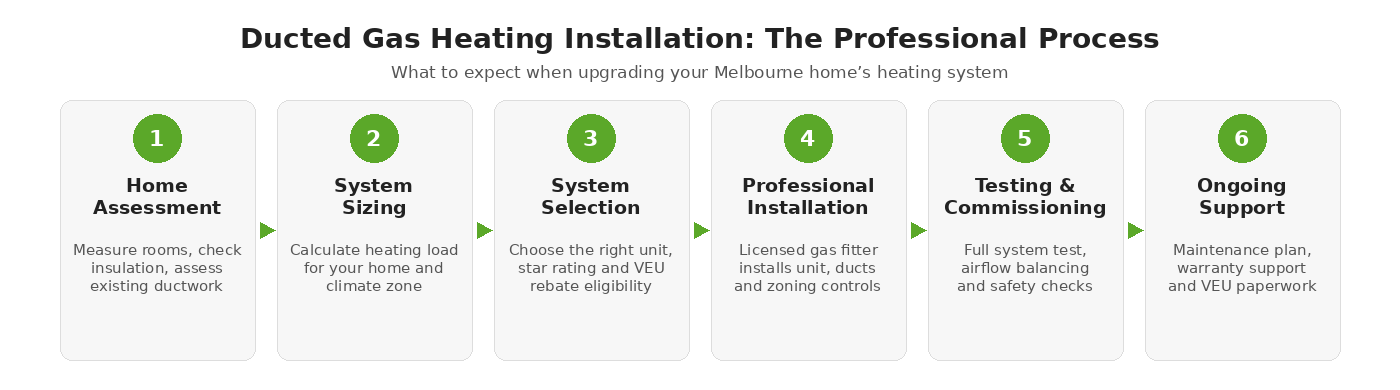
Figure 1: The six stages of a professional ducted gas heating installation
Gas Ducted Heating vs Other Heating Options
Ducted gas heating is one of several options available to Melbourne homeowners. Understanding how it compares helps you decide which approach suits your property and budget.
Gas Ducted Heating
- Fast, powerful heating ideal for Melbourne’s cold winters and larger homes
- Lower running costs than electric resistance heating in most Victorian gas tariff areas
- Zoning capability allows room-by-room control
- Heating only (does not provide cooling)
- Requires gas connection and suitable duct routes
Reverse Cycle Ducted (Heat Pump)
- Provides both heating and cooling from one system
- Highly energy-efficient, especially in moderate climates
- Higher upfront cost but potentially lower combined running costs
- Performance can drop in very cold conditions (below 2°C) without a cold-climate rated unit
- Eligible for VEU rebates when replacing less efficient systems
Split System Air Conditioning
- Affordable single-room heating and cooling solution
- Easy to install without ductwork
- Best for smaller homes, apartments or supplementing a ducted system
- Multiple units needed for whole-home comfort, which adds cost
Which Option Suits Your Property?
For larger homes in Melbourne’s eastern suburbs and Yarra Valley that primarily need powerful winter heating, ducted gas heating remains a strong choice. If you also need cooling, a reverse-cycle ducted system or a combination of gas heating with a split-system cooling may be more practical.
TruEast assesses each property individually. The honest recommendation might be that your existing system only needs a repair, not a full replacement. That approach to diagnosis first is part of what sets qualified technicians apart.
The Real Cost of the Wrong System or Delayed Action
Choosing the wrong heating system or putting off a necessary upgrade has tangible financial consequences beyond a higher gas bill.
Undersized or Oversized Systems
An undersized gas heater in a Dandenong Ranges home, where winter temperatures drop lower than inner Melbourne, will never reach the set temperature on the coldest days. It runs non-stop, consuming maximum gas while delivering inadequate warmth.
An oversized system costs more to purchase and cycles on and off excessively. This rapid cycling prevents the system from running long enough to distribute heat evenly through the ductwork, leaving far rooms cooler than those near the unit.
Poorly Installed Systems
Installation quality matters as much as the unit itself. Common shortcuts include using undersized or poorly sealed ducts, failing to insulate ductwork in the roof cavity, incorrect gas pressure settings and skipping the commissioning process where airflow is balanced across all outlets.
These shortcuts might save time on installation day but create years of inefficiency, discomfort and premature component failure. Always confirm that your installer holds a full refrigeration and air conditioning licence, not a restricted licence that limits the scope of work they can legally perform.
Missed VEU Rebate Opportunities
The Victorian Energy Upgrades program provides rebates that can reduce your upfront costs by hundreds of dollars.
However, the rebate amount and eligibility criteria can change. Delaying a decision today may mean receiving a smaller rebate or missing out entirely if the program adjusts its incentives.
Best Practices for Melbourne Homeowners Considering Ducted Gas Heating
Knowing what to look for and what questions to ask puts you in a stronger position before committing to any heating upgrade.
Warning Signs Your System Needs Replacing
- Your gas heater is 15 years or older
- Energy bills have been increasing despite similar usage patterns
- Some rooms take much longer to warm up than others
- You hear banging, rattling or unusual noises during operation
- The unit requires increasingly frequent repairs
- You notice a yellow or flickering pilot flame (possible combustion issue)
Questions to Ask Your HVAC Contractor
When evaluating contractors for a gas ducted heating installation, these questions help you distinguish qualified professionals from those cutting corners.
- Do your technicians hold full air conditioning and refrigeration trade licences (not restricted licences)?
- Will you perform a heating load calculation specific to my home?
- Can you explain the star rating and expected running costs of the recommended unit?
- Do you handle VEU rebate applications and paperwork?
- What warranty and aftercare support do you provide?
Maintaining Your Gas Ducted Heating Between Services
Between professional services, a few simple steps keep your system performing well.
- Clean or replace the return air filter every three to six months
- Keep outlet grilles clear of furniture, curtains and other obstructions
- Check that external flues and vents are not blocked by debris or vegetation
- Listen for changes in operating sounds that may indicate developing issues
Professional servicing by a licensed gas fitter should be carried out annually. This includes checking the heat exchanger, gas pressure, burner operation and safety controls. Regular servicing extends the life of your system and maintains its efficiency.
Understanding and Claiming VEU Rebates
The Victorian Energy Upgrades program is administered by the Essential Services Commission and provides financial incentives for energy-efficient upgrades. When you install an eligible high-efficiency gas heater, a portion of the cost is covered through the rebate.
TruEast handles the entire VEU rebate process. The team manages the paperwork, eligibility checks and submissions so the rebate is applied directly to your installation cost. There is no separate claim for you to lodge.
How TruEast Approaches Ducted Gas Heating Installation in Melbourne
TruEast’s process starts with listening. Before recommending any system, a qualified technician visits your property to understand what is and is not working with your current setup.
Assessment and Honest Recommendations
The technician inspects your existing heater, ductwork condition, insulation and home layout. If a repair is all that is needed, that is what TruEast recommends. There is no incentive to push a full replacement when a targeted fix restores performance.
When replacement is the right path, TruEast provides a clear recommendation with a specific unit model, star rating, expected running costs and the applicable VEU rebate amount. You receive all the information to make a confident decision.
Qualified Technicians, Not Restricted Licences
Every TruEast technician completes a full four-year apprenticeship in air conditioning and refrigeration. This is an important distinction. A restricted licence limits the type and size of systems a technician can legally work on.
TruEast’s fully qualified team can install, service and repair any residential or commercial gas ducted heating system.
In-house training ensures that every team member meets TruEast’s standards for installation quality, customer communication and safety compliance.
Responsive Service and Long-Term Support
One of the most common frustrations homeowners share is contractors who are difficult to reach. TruEast’s commitment is responsive communication. Calls and messages are returned promptly, even if the initial response is simply to confirm when a detailed answer or visit will follow.
Based in Croydon, TruEast serves Melbourne’s eastern suburbs, the Yarra Valley and the Dandenong Ranges. The team provides installation, repair and ongoing maintenance, building long-term relationships rather than completing a job and disappearing.
Finance Options
TruEast offers ZipPay and AfterPay to help manage the upfront cost of a new ducted gas heating installation. Combined with VEU rebate savings, these options make upgrading to an efficient system more accessible.
Frequently Asked Questions About Ducted Gas Heating Installation
How much does ducted gas heating installation cost in Melbourne?
The cost varies depending on your home’s size, existing ductwork condition and the unit selected. A typical residential installation ranges from $3,500 to $7,000 before VEU rebates. TruEast provides a detailed written quote after an on-site assessment so there are no surprises.
How long does installation take?
Most standard ducted gas heating installations are completed in one day. If new ductwork is required or the home has complex roof access, it may take one to two days. Your technician will confirm the expected timeline during the assessment.
Can I keep my existing ductwork?
In many cases, yes. If your ducts are in good condition with intact insulation and secure connections, they can be reused with a new heater unit. However, damaged, sagging or poorly insulated ducts should be replaced to ensure full efficiency from your new system.
What VEU rebates are available for gas heating upgrades?
Rebate amounts depend on the efficiency improvement achieved. Replacing an older low-star unit with a 5 or 6-star system typically qualifies for a significant rebate. TruEast manages the full application process and applies the rebate directly to your invoice.
Is ducted gas heating cheaper to run than reverse cycle?
It depends on gas and electricity prices in your area and the efficiency of each system. In many parts of Victoria, gas ducted heating offers competitive running costs for winter heating. Reverse cycle systems are more efficient overall but higher electricity rates can offset this advantage. TruEast can compare estimated running costs for your specific situation.
How often should a gas-ducted heater be serviced?
Annual servicing by a licensed gas fitter is recommended. This includes checking the heat exchanger for cracks, verifying gas pressure and burner operation, cleaning components and testing safety controls. Regular servicing extends the system’s lifespan and maintains peak efficiency.
Should I repair or replace my old gas heater?
If your heater is under 12 years old and the repair cost is reasonable, a repair often makes sense. For units over 15 years old, or those requiring an expensive component like a heat exchanger, replacement with a modern high-efficiency unit is usually more economical when you factor in lower running costs and VEU rebates.
Do you service commercial properties as well?
Yes. TruEast provides gas-ducted heating installation, repair and maintenance for both residential and commercial properties across Melbourne’s eastern suburbs and surrounding areas.
Upgrading to an energy-efficient split system is one of the smartest investments a Melbourne homeowner can make. With the Victorian Energy Upgrades program making it more affordable than ever, there's no reason to keep paying inflated energy bills for a system that doesn't deliver proper comfort.
The key is getting it right from the start: the right system, properly sized, professionally installed by qualified technicians and supported with ongoing maintenance.
TruEast makes the entire process straightforward, from your initial assessment through to VEU rebate paperwork and long-term support. To find out how much you could save with a split system rebate Victoria homeowners are already taking advantage of, get in touch today.
Call (03) 4054 5310 or 0411 215 360 tto book a no-obligation assessment. With VEU rebates expertise, flexible finance options and responsive local service from Croydon to the Dandenong Ranges, comfortable and efficient heating is closer than you think.